Sunflower Denim Embroidery Pattern Review
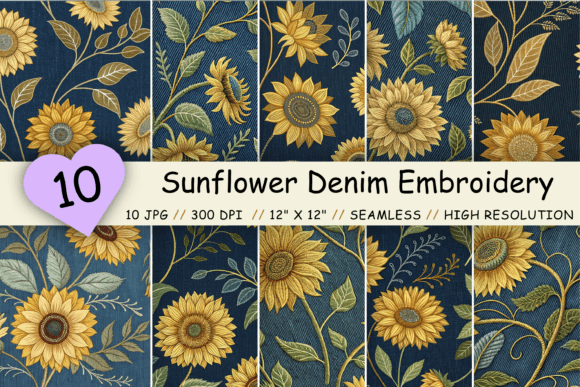
As a professional embroidery designer who spends more time behind the needle than at a keyboard, I approach every new digital asset with a healthy dose of skepticism. When I first opened the Sunflower Denim Embroidery Pattern bundle, I wasn't looking for pretty pixels; I was looking for stitch integrity. The description promises a seamless pattern bundle featuring vintage jeans floral aesthetics and rustic textile backgrounds, but for those of us running a craft business or managing an Etsy shop, the real question is always the same: will this actually sew out cleanly on physical fabric?
My initial impression of this Sunflower Denim Embroidery Pattern is that it captures a specific nostalgic mood perfectly. It avoids the overly glossy, cartoonish look that plagues many machine embroidery design files. Instead, it leans into a matte, textured appearance that mimics actual thread on denim. For a designer, this visual personality suggests immediate applications in rustic home decor and heritage-style apparel. However, translating a graphic background into a functional embroidery project requires understanding how these digital papers interact with real-world variables like stabilizer choice and fabric texture.
Real-World Application: The Custom Tote Bag Test
To truly evaluate this design, I mentally placed it into one of my most frequent client requests: a personalized gift tote bag for a fall wedding party. Tote bags are deceptively difficult because canvas can be unforgiving, and customers expect crisp details even on coarse fabrics. In this scenario, the Sunflower Denim Embroidery Pattern serves as an excellent foundational element rather than just a standalone motif.
I envision using this seamless pattern as a textured fill within a larger applique design or as a border accent framing custom lettering. Because the pattern emulates the look of vintage jeans, it pairs naturally with unbleached canvas or actual denim tote bags. The key here is contrast. If I were stitching this onto dark indigo denim, the design’s inherent "denim" aesthetic might get lost unless I adjusted the thread colors to a lighter cream or gold. Conversely, on a natural canvas tote bag design, the blue tones in the pattern would pop beautifully, creating that sought-after handmade product feel that buyers associate with high-quality boutique branding.
For small shop products like these, the value lies in versatility. This isn't just a flower; it is a textural element that elevates simple sweatshirt embroidery or apron customization from generic to artisanal. When customers see a finished product where the background texture looks intentional and cohesive, it builds trust in your brand consistency and professionalism.
Navigating Fabric Texture and Stitch Density
While the visual appeal is strong, practical execution requires caution. As graphics intended for embroidery, these patterns likely possess varying levels of complexity. When working with a design that mimics woven textiles, you must be hyper-aware of stitch density. A pattern that looks like denim on screen consists of thousands of tiny stitches in reality. If the density is too high for your chosen fabric, you risk puckering, needle breaks, or a stiff, bulletproof result that ruins the drape of a garment.
This is particularly critical for baby embroidery or lightweight summer apparel. I would hesitate to use a dense, full-coverage version of this Sunflower Denim Embroidery Pattern on thin jersey knits or stretchy t-shirts without significant modification. The weight of the stitches could distort the fabric, making the garment unwearable. For these delicate projects, consider extracting individual elements or reducing the density in your digitizing software before hooping.
Textured fabrics present another challenge. While the design mimics denim texture, stitching it onto actual textured denim creates a "texture on texture" situation. This can be stunning if done correctly, but it can also cause registration issues where the top stitches sink into the fabric weave. Always test on scrap fabric first. You may need to add a layer of water-soluble topping to ensure the satin stitch and fill stitch details remain visible above the fabric grain.
Technical Considerations for Commercial Use
For Etsy sellers and creative entrepreneurs, licensing and file compatibility are as important as aesthetics. Before listing any finished product or digital embroidery file derived from this bundle, verify the commercial terms. Does the license allow for selling physical embroidered items? Can you use the graphics for printable mockups to showcase your work without stitching every variation? Clarifying these rights protects your business assets and prevents future legal headaches.
When preparing for commercial embroidery projects, hoop size selection is paramount. Seamless patterns often tempt makers to maximize their hoop area, but larger hoops increase the risk of shifting. If you are creating holiday embroidery items or patches that require precise alignment, break the pattern into smaller, manageable sections. This ensures better tension control and reduces waste if a stitch-out fails.
Thread color management also deserves attention. The "vintage jeans" description implies specific blue hues, but thread brands vary wildly. Do not assume the digital preview matches your polyester or rayon inventory. Create a physical color chart test stitch-out. Sometimes, what reads as a soft vintage blue on screen translates to a harsh navy in thread form. Adjusting to a variegated thread can often enhance the rustic textile effect better than a solid color, adding depth that mirrors the original graphic's intent.
Elevating Product Value Through Design Choices
Ultimately, the Sunflower Denim Embroidery Pattern succeeds because it offers more than just a floral motif; it offers atmosphere. In a saturated market of digital product sellers, standing out means offering designs that evoke emotion. This pattern taps into the enduring popularity of cottagecore and rustic aesthetics while remaining neutral enough for year-round sales.
However, professional results depend on restraint. Avoid using this pattern as a chaotic all-over print on complex garments. Let it breathe. Use it as a deliberate design asset that complements rather than competes with your main subject. Whether you are crafting a nursery pillow cover, a personalized gift for a gardener, or merchandise for a farm stand, the goal is to make the embroidery look like it belongs there, not like it was stamped on.
Remember to inspect small details before final production. Intricate floral centers or tiny leaf veins in a background pattern can become mud if scaled down too aggressively. If you are adapting this for an embroidered patch or cap, simplify the design. Caps have curved surfaces that hate dense fills, and patches require clean edges. Respecting the limitations of your medium is what separates hobbyists from professionals.
By treating this Sunflower Denim Embroidery Pattern as a raw material rather than a finished solution, you unlock its true potential. Test rigorously, stabilize appropriately, and always prioritize the tactile quality of the finished product over the digital preview. Your customers are buying the stitch, not the screen, and honoring that distinction is the hallmark of a successful embroidery business.